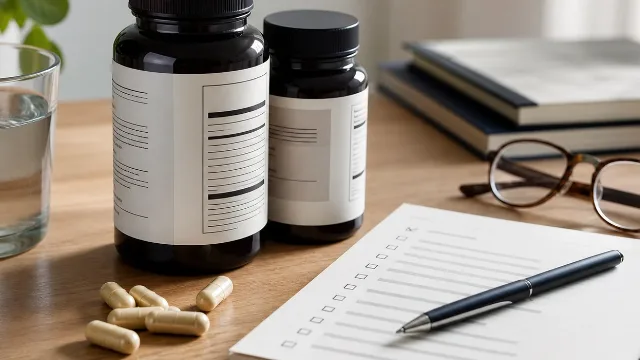
Caffeine decision guide
Caffeine Alternatives for Focus: What to Try When Caffeine Is Not Fitting
Caffeine is useful for many people, but it is not always the right focus tool.
Some people get jitters. Some crash later. Some find that caffeine helps in the morning but disrupts sleep at night. Others already get enough caffeine from coffee, tea, or energy drinks and do not want a supplement that adds even more.
The goal is not to find a stronger caffeine replacement. The better goal is to choose the next sensible route: better caffeine timing, smoother caffeine, lower-stimulation support, caffeine-free focus products, or basic recovery habits that caffeine may be masking.
For most healthy adults, the FDA cites up to 400 mg of caffeine per day as an amount not generally associated with dangerous negative effects, but sensitivity varies widely. Caffeine can also appear in foods, drinks, supplements, energy products, and some medications, so total intake can be easy to underestimate.

Start with why caffeine is not working for you
Caffeine alternative can mean several different things.
For one person, it means less jitters. For another, it means protecting sleep. For someone else, it means getting steady energy without adding another stimulant source.
That is why the first question is not what replaces caffeine. The better question is: what problem is caffeine causing?
A caffeine alternative for jitters is different from a caffeine alternative for sleep. A fatigue-support route is different from a calm-focus route. A caffeine-free product is different from simply taking less coffee.
Once the problem is clear, the next step becomes much easier.
Option 1: Adjust caffeine timing or amount
The simplest caffeine alternative is not always another supplement.
Sometimes the better first move is adjusting the caffeine you already use.
That may mean:
- Taking caffeine earlier.
- Reducing the serving size.
- Avoiding late-day caffeine.
- Tracking total caffeine from coffee, tea, energy drinks, and supplements.
- Stopping the habit of stacking several caffeine sources.
- Avoiding products with hidden caffeine sources.
This route may suit you if caffeine still helps, but the tradeoffs are starting to show up.
A timing or dose adjustment is especially worth trying if caffeine helps your focus but causes sleep disruption, afternoon crashes, restlessness, or the feeling that you need more caffeine the next day.
Read next: Caffeine and Focus.
Option 2: L-Theanine + Caffeine for smoother caffeine
If caffeine helps but feels too sharp, L-Theanine + Caffeine is one of the cleanest routes to understand.
This is not a caffeine replacement. It is a caffeine-pairing route.
The idea is simple: instead of adding more stimulation, you compare a more controlled caffeine setup where both the caffeine amount and L-Theanine amount are clearly disclosed.
This route may suit you if:
- Caffeine improves focus but sometimes causes jitters.
- Coffee helps, but the edge feels too harsh.
- Energy drinks feel too aggressive.
- You want a simpler route than broad stimulant blends.
- You want both caffeine and L-Theanine amounts visible on the label.
The main label checks are:
- Caffeine amount per serving.
- L-Theanine amount per serving.
- Ratio between the two.
- Whether other stimulants are included.
- Whether caffeine sources are hidden.
- Warning language around caffeine sensitivity and sleep.
Option 3: Lower-jitter focus products
If the main problem is jitters, the best alternative may be a lower-jitter product category rather than a single ingredient.
This means comparing products by stimulation load first.
A lower-jitter focus route may suit you if:
- Caffeine helps but high doses feel uncomfortable.
- You feel wired, shaky, tense, or restless from focus products.
- You want clearer caffeine amounts.
- You want to avoid hidden stimulant blends.
- You want calmer-feeling product criteria before choosing a brand.
The main product checks are:
- Total caffeine per serving.
- Hidden caffeine sources.
- Guarana, yerba mate, kola nut, or energy blend language.
- L-Theanine amount if included.
- Warning-label clarity.
- Whether the product makes realistic claims.
Read next: Best Focus Supplements for Jitters.
Option 4: Caffeine-free focus products
If caffeine itself is the issue, another caffeine-based supplement may not be the right move.
Caffeine-free focus products can be built around several different routes: calm focus, creatine, mental fatigue, choline support, functional mushrooms, herbal mental energy, or transparent blends.
This route may suit you if:
- Caffeine often causes jitters.
- Caffeine disrupts your sleep.
- You already get enough caffeine from coffee or tea.
- You want focus support without adding another caffeine source.
- You want to compare caffeine-free products by label quality.
The main label checks are:
- Caffeine-free status.
- Hidden caffeine sources.
- Ingredient route.
- Serving size.
- Blend complexity.
- Warning information.
- Claim quality.
Read next: Best Caffeine-Free Focus Supplements.
Option 5: Rhodiola for mental fatigue
Sometimes the problem is not caffeine itself. The problem is that you are trying to use caffeine to cover fatigue.
That is where Rhodiola may be worth comparing.
Rhodiola is better understood as a mental-fatigue route than as a direct caffeine replacement. It may be relevant when the issue feels like tiredness, demanding periods, workload fatigue, or stress-related low energy.
This route may suit you if:
- Your focus problem feels like fatigue.
- Adding more caffeine does not feel like the right answer.
- You want to compare herbal fatigue-support products.
- You are interested in lower-stimulation support for demanding periods.
The main label checks are:
- Rhodiola rosea species clarity.
- Extract standardisation.
- Rosavin and salidroside information if provided.
- Serving size.
- Blend status.
- Whether caffeine or other alertness ingredients are included.
Option 6: Creatine for caffeine-free performance support
Creatine is not a caffeine replacement, but it is one of the strongest caffeine-free ingredients to understand.
It belongs in the performance-support route rather than the instant alertness route. That makes it relevant for people who want caffeine-free support connected to mental performance, cognitive workload, sleep loss, or demanding conditions.
This route may suit you if:
- You want a caffeine-free performance-support ingredient.
- You prefer simple products over broad focus blends.
- You want something easier to compare by serving size and value.
- You are not looking for a stimulant-style effect.
The main label checks are:
- Creatine monohydrate as the default comparison point.
- Clear serving size.
- Number of servings.
- Unnecessary blend complexity.
- Price/value.
- Realistic claims around performance and cognitive support.
Option 7: Basics before supplements
Sometimes caffeine alternatives are not the first move.
If you are sleeping poorly, skipping meals, dehydrated, overusing caffeine, or working without breaks, a new supplement may only cover up the real problem for a short time.
Before adding another product, check:
- Sleep and wake timing.
- Caffeine cutoff time.
- Total caffeine intake.
- Food timing.
- Hydration.
- Workload and breaks.
- Whether fatigue is persistent or unusual.
This does not mean supplements are useless. It means caffeine is often used to patch basic energy problems, and the patch can become part of the problem.
If fatigue is persistent, severe, unexplained, or connected to other symptoms, that is a health-context issue rather than a supplement-shopping issue.
What to avoid when replacing caffeine
The biggest mistake is replacing one overstimulating routine with another.
Be careful with:
- High-caffeine energy blends.
- Hidden caffeine sources.
- Multiple stimulant ingredients.
- Clean energy claims without clear caffeine amounts.
- Proprietary blends.
- Aggressive no crash promises.
- Products that hide serving sizes.
- Stacking coffee, energy drinks, pre-workout, and focus supplements.
A caffeine alternative should make the tradeoff clearer, not harder to understand.
If you cannot tell whether a product contains caffeine, how much stimulant load it adds, or what job the ingredient is supposed to do, it is probably not the best starting point.
Caffeine alternatives decision map
Use this as a simple route map:
- Caffeine helps but feels sharp: compare L-Theanine + Caffeine.
- Caffeine causes jitters: compare lower-jitter focus criteria.
- Caffeine hurts sleep: reduce timing and total intake first.
- You want no caffeine in the product: compare caffeine-free focus supplements.
- The problem feels like mental fatigue: compare Rhodiola.
- You want caffeine-free performance support: compare creatine.
- You are unsure what is in the product: read the label guide.
- Fatigue feels persistent or unusual: do not treat supplements as the main answer.
The point is not to find a universal caffeine replacement. The point is to choose the route that matches the problem.
Safety before trying caffeine alternatives
Caffeine alternatives can still have safety questions.
Caffeine-free does not mean risk-free. Herbal ingredients, choline ingredients, mushroom extracts, adaptogens, blends, and sleep-adjacent ingredients can still matter depending on your health context.
Use extra care if you are pregnant or breastfeeding, taking medication, managing a medical condition, sensitive to supplements, dealing with anxiety or sleep issues, managing blood pressure or blood-sugar concerns, or planning surgery.
A sensible decision starts with three checks:
- Why am I trying to reduce or replace caffeine?
- Does this alternative clearly match that problem?
- Does the label make the dose, ingredients, and warnings easy to understand?
If the answer is unclear, start with the simpler route: reduce uncertainty before adding complexity.
Evidence and sources
Caffeine alternatives are not one-for-one replacements for caffeine. Caffeine has a distinct stimulant effect, and alternative routes usually support different goals: smoother caffeine use, lower stimulation, mental fatigue, caffeine-free performance support, or label clarity.
The FDA notes that caffeine sensitivity varies and that caffeine can appear in products people may not expect, including supplements and some medications. It also says many foods and beverages voluntarily disclose caffeine amounts, but not every context makes caffeine easy to track.
This page focuses on decision-making rather than product rankings. Product-specific recommendations are handled on buying-guide pages only after product research is completed.
Source checked
Sources
Sources are included so readers can check the basis for our wording. We use sources to keep claims specific and cautious; sources do not mean an ingredient or product will have predictable results.
See Editorial Standards and Methodology for how sources are used.
- Safety / regulatory guidance
Spilling the Beans: How Much Caffeine is Too Much?
Used for adult caffeine intake context, sensitivity variation, unexpected caffeine sources, and label cautions.
- Safety / regulatory guidance
Scientific Opinion on the safety of caffeine
Authoritative caffeine safety review. Useful for framing total intake and sensitivity cautions.
- Safety / regulatory guidance
FDA Warns Consumers About Pure and Highly Concentrated Caffeine
Regulatory warning relevant to highly concentrated caffeine products and overdose risk.
- Human study
Human study supporting cautious discussion of L-Theanine + Caffeine for short-term cognitive performance and alertness.
- Human study
Human crossover study that supports balanced wording because effects were task-specific.
Editorial process
Discernwell is written by Craig A. and source-checked against published research, supplement labels, and safety guidance where available. We do not claim medical review unless a qualified reviewer is named on the page.
Read the Editorial Standards and Methodology for more detail.